Cocoa, the main ingredient in chocolate, has its origins in the Amazon and Orinoco river basins of Colombia, and is now cultivated in many parts of the country.
To help growers achieve a more valuable, more aromatic and less toxic product in the future, researchers from the Faculty of Engineering and Sciences of the Universidad del Valle (Univalle) have produced in the MIBIA laboratory a powder with a high content of microorganisms, isolated, characterized and selected from the cocoa itself and that can help in the fermentation process of this.
Cocoa production reached 621.58 tons in Colombia during 2022; and was exported to Mexico (52.8%), Belgium (26%), United States (3.74%), Estonia (3.94%) and Argentina, according to statistics from FedeCacao.
Jenifer Criollo Nuñez, PhD student in Engineering with emphasis in Food Engineering, from the Applied Microbiology and Biotechnology research group (MIBIA) of the Universidad del Valle and Masters researcher at Agrosavia explained that, with controlled fermentation, a more efficient fermentation is achieved, allowing to improve the living conditions of cocoa farmers and their families, being the main motivation of his research group.
"The illusion of generating a biotechnological tool to promote fermentation that allows national producers to target international markets through the generation of outstanding sensory profiles," Criollo said.
 |
| Photo: scanning electron microscopy of encapsulated yeast. Credit: MIBIA |
The Research
In the research paper, “Effect of microencapsulated inoculum of Pichia kudriavzevii on the fermentation and sensory quality of cacao CCN51 genotype”, of which Criollo is the lead author, the researchers tested more than 40 different types of yeast to find efficient strains to ferment cocoa and produce the molecules that characterize the aroma and flavor of chocolate.
"Then, we selected the yeast that reproduced the fastest," said Cristina María Ramírez Toro, professor of the GIPAB research group of the School of Food Engineering of Univalle and MIBIA.
Today, the cocoa fermentation process on Colombian farms is still very artisanal, and according to Professor Ramírez, the starter inoculums continue to be applied in liquid form.
The solution developed by the researchers is to use a biocomposite, using a microbial polysaccharide, to protect the microencapsulate. The dry yeast, is similar to the inoculum used to make bread - a powder to apply to cocoa beans for fermentation.
"The use of microencapsulates with characterized and selected yeasts from the same cocoa crop, allow to obtain a controlled fermentation, with better aromatic characteristics and in less time," said Professor Ramirez; and added that microencapsulates allow to be applied in a known concentration.
"If a farmer knows the amount of cocoa to ferment, he can add a known volume of kilograms of this dry powder, which is a solid material, which facilitates transportation and handling in the field," said Professor Ramirez.
Microencapsulation also helps solve the problem of infection of the fermentation batch with toxin-producing fungi.
"The application of these microencapsulates inhibits the growth of undesirable and toxin-producing microorganisms, since the microorganisms contained in them have inhibitory properties against pathogens," Professor Ramírez said.
Read more from the School of Food Engineering: Boosting coffee's taste and smell by controlling the drying process with affordable sensors
 |
| Photo: A sample of the polysaccharide that is the basis for microencapsulation; in the MIBIA laboratory. Credit: Alexander Bejarano/NCC-FI/Univalle |
Ambitions for the future
Professor Ramirez said that so far, all the development has been in the laboratory.
Criollo also explained that the project comprised four phases for the development of microbiological starters.
"In the first, the selection of promising cocoa fermentation promoter microorganisms was achieved; in the second stage, the composition of organic culture media for mass multiplication specific for each microorganism was standardized, using substrates such as the residue or exudate from the first day of fermentation; in the third, the composition of the wall material for the encapsulated microorganisms was standardized; and finally, five pure and mixed stage promoter starters were tested," Criollo said.
Both Ramirez and Criollo commented that the next challenge is to test the effectiveness on a large scale, to use them nationally, substantially improve cocoa quality and help growers earn a better price for their crops.
"Payment for quality at the national level is minimal or non-existent, making cocoa an unprofitable production system; however, there is an international market for specialty cocoa that can pay up to 10 times the value of conventional cocoa," Criollo said.
If you would like to contact the researcher or learn more about the project, please write to the Communications Office, Faculty of Engineering: comunicaingenieria(at)correounivalle.edu.co.
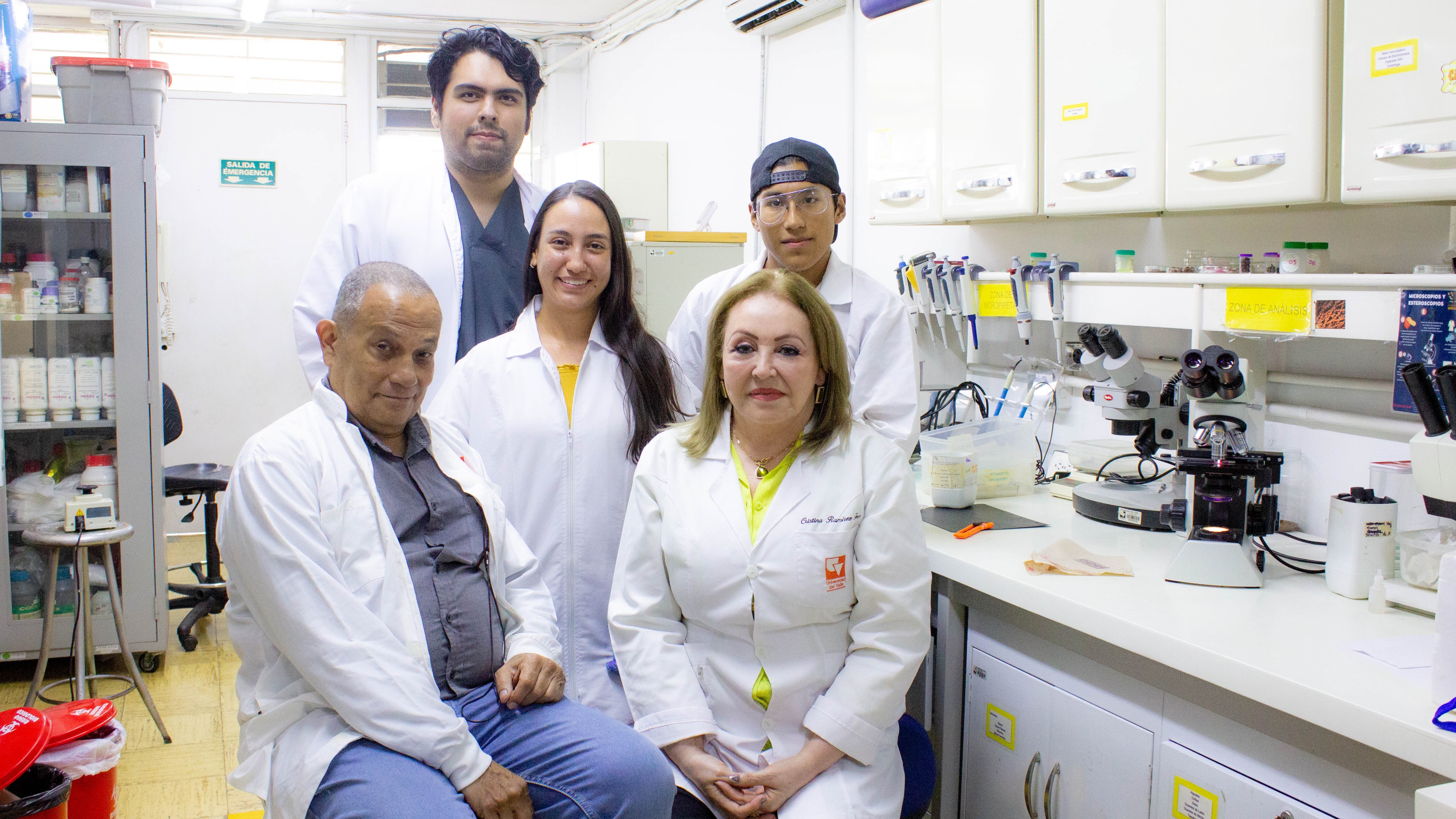
Cover photo: MIBIA Director Germán Bolívar (front left); Cristina María Ramírez Toro, head professor of the GIPAB group at Univalle's School of Food Engineering (front right) and students of the Applied Microbiology and Biotechnology Laboratory. Credit: Alexander Bejarano/NCC-FI/Univalle
Comentarios
Publicar un comentario